“Quality service for every client” tells a buyer almost nothing. A useful value proposition says who the service is for, what changes for that buyer, and why the promise is credible. The point is to help someone decide whether your offer fits their situation.
Below, I break down two real service-business pages, show three hypothetical rewrites, and give you a promise-to-proof worksheet you can use on your own offer. The real examples show what the companies say publicly. Their pages alone cannot prove that every customer gets the promised result.
What is a value proposition for a service business?
A value proposition is the reason a particular buyer should choose your service for a particular job. It connects a customer need to an outcome and to the way you deliver it. Strategyzer’s value proposition guidance stresses a clearly defined customer segment and differences customers actually care about.
For a service business, I would check four questions before polishing a headline:
- Who is the buyer? Name the person or business with the problem, not everyone who could technically buy.
- What situation brings them here? Describe the job they need done or the friction they want removed.
- What will they get? Name a useful deliverable or change without promising an outcome you cannot control.
- Why believe you? Show the process, scope, sample work, qualifications, or customer evidence that supports the claim.
A value proposition can appear in a headline, but it is more than a clever line. The headline can state the promise; the surrounding page can explain the service and show the evidence.
Two real value proposition examples from service businesses
These are examples of published messaging, reviewed in November 2026. They are not independent assessments of service quality. Each example shows a different way to make a service promise more concrete.
Bench: make the deliverable and support visible
On its Seattle bookkeeping page, Bench connects online bookkeeping and human support to a recurring business task. The page describes a bookkeeper organizing transactions each month and preparing financial statements. Its plan details also identify dedicated bookkeeping experts and monthly books.
What works in the message: A buyer can see the job, the output, and who helps deliver it. “Bookkeeping” becomes a monthly service with recognizable financial documents, rather than a vague promise of peace of mind.
What the page does not prove: A service description is evidence of the offer being advertised, not independent proof that every customer’s books will be accurate or delivered on time. A prospective buyer would still need to check the plan terms, the fit for their business, and the working relationship.
Helpling Singapore: make the method tangible
The Helpling Singapore homepage lets visitors choose a home service and review its scope before booking. For cleaning, it presents provider training and a 50-point checklist as reasons to expect a consistent service.
What works in the message: “Thorough cleaning” is an abstract claim. Training and a checklist give the buyer something specific to inspect or ask about. The Singapore location also makes the offer’s market clear.
What the page does not prove: The stated process is a company claim. The page does not establish that every cleaning meets the same standard. If you use a process claim like this in your own copy, be ready to show how it is actually followed.
Three hypothetical rewrites you can adapt
The following businesses and lines are hypothetical. The stronger versions are drafting examples, not verified claims. Only use a detail if the business can deliver and support it.
Bookkeeping service
Vague: “Expert accounting solutions for your success.”
More useful: “Monthly books and a plain-English financial summary for independent retailers, prepared with a named bookkeeper.”
This version gives the buyer a recognizable output, a specific audience, and a delivery detail. Before publishing it, the firm should confirm that every applicable plan includes the summary and named contact. If not, narrow the promise to the plans that do.
Home cleaning service
Vague: “A cleaner home, every time.”
More useful: “Book a home clean with a room-by-room task list you can review before the visit.”
The second line replaces an absolute outcome with an inspectable part of the service. It works only if the buyer really can review the list and the cleaner uses it.
Design studio
Vague: “Creative design that elevates your brand.”
More useful: “A website design package for local clinics that includes page layouts, mobile screens, and a handoff file your developer can use.”
The deliverables help a buyer compare scope. “Local clinics” gives the line focus, but the studio should choose that audience only if it serves them and understands their requirements. The sentence does not claim more bookings or better patient outcomes without evidence.
Use a promise-to-proof worksheet before you publish
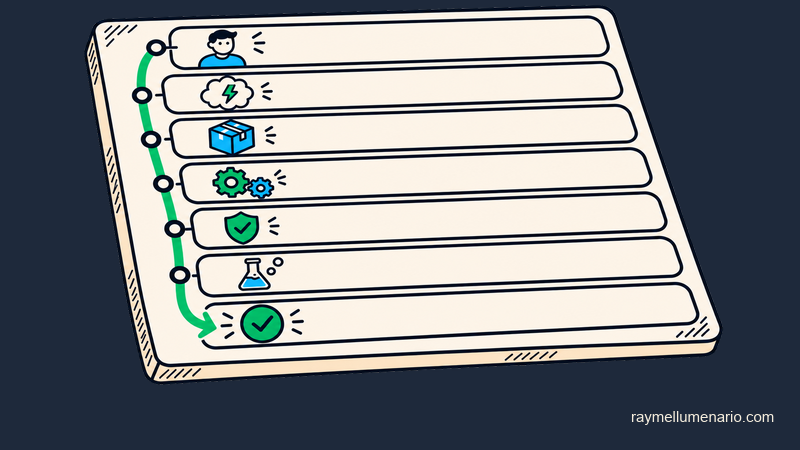
I recommend writing the offer in plain language first, then checking each part against what the business can show. This worksheet is a drafting tool, not a score or a guarantee of performance. Work through one buyer segment at a time so the promise stays specific.
| Field | Question to answer | Hypothetical example |
|---|---|---|
| Buyer | Who has this need? | Independent retailers who handle day-to-day sales but need organized monthly books. |
| Situation | What task or frustration brings them here? | Transactions need sorting and the owner wants a clear monthly view. |
| Proposed outcome | What specific output can the service deliver? | Monthly books and a short financial summary. |
| Delivery mechanism | How does the work get done? | A named bookkeeper reviews and explains the monthly information. |
| Public support | What can a buyer inspect now? | A sample summary, the plan scope, and an explanation of the review process, if these exist. |
| Unresolved claim | What sounds good but has not been checked? | “Delivered within ten business days.” Leave this out until records support it. |
| Next test | What would show whether the message is understood and valued? | Ask suitable prospects what they expect to receive, then compare inquiries and objections after the page changes. |
Now turn the supported fields into one sentence: “For [buyer in a specific situation], I provide [deliverable or useful change] through [credible method].” That sentence is a starting point, not a required homepage formula. If the method is ordinary in your market, find out what buyers actually value before calling it a difference.
For the hypothetical bookkeeper, the draft might be: “Monthly books and a plain-English financial summary for independent retailers, prepared with a named bookkeeper.” The firm should publish that only after checking the plan scope and preparing the sample or process explanation promised on the page.
Test the message before treating it as proven
First, check comprehension. Show the headline and nearby copy to someone who resembles your buyer. Ask what service they think you sell, what they would receive, and what question remains unanswered. Do not explain the sentence before they answer.
Next, check relevance. Ask about the last time they faced the underlying problem and how they handled it. Avoid asking only whether they “like” the copy. Strategyzer’s testing guidance distinguishes what people say from what they do and recommends questions about actual experiences.
Finally, check response. Put the revised proposition where an appropriate buyer will see it, such as a relevant service page. Watch qualified inquiries and the questions people ask, while accounting for changes in traffic and offer. A few positive comments do not prove demand, and a clearer sentence does not guarantee more sales. If the message is understood but people hesitate, inspect the rest of the visitor-to-inquiry path with a website conversion audit.
Where should the value proposition appear?
Put the core promise near the top of the page where a new buyer decides whether to keep reading. Use the next section to explain scope and support the claim. On a service page, adapt the language to that service’s buyer and deliverable. In a proposal, use the same promise but make it specific to the prospect’s situation.
The aim is consistency, not identical wording everywhere. A short headline can carry the main idea while the surrounding copy answers “What exactly do I get?” and “Why should I believe this?” That follows the homepage clarity principles from Nielsen Norman Group without reducing the whole proposition to a slogan.
Start with one buyer, one useful promise, and one piece of support you can show. If a claim fails the proof check, narrow it before you make it louder.