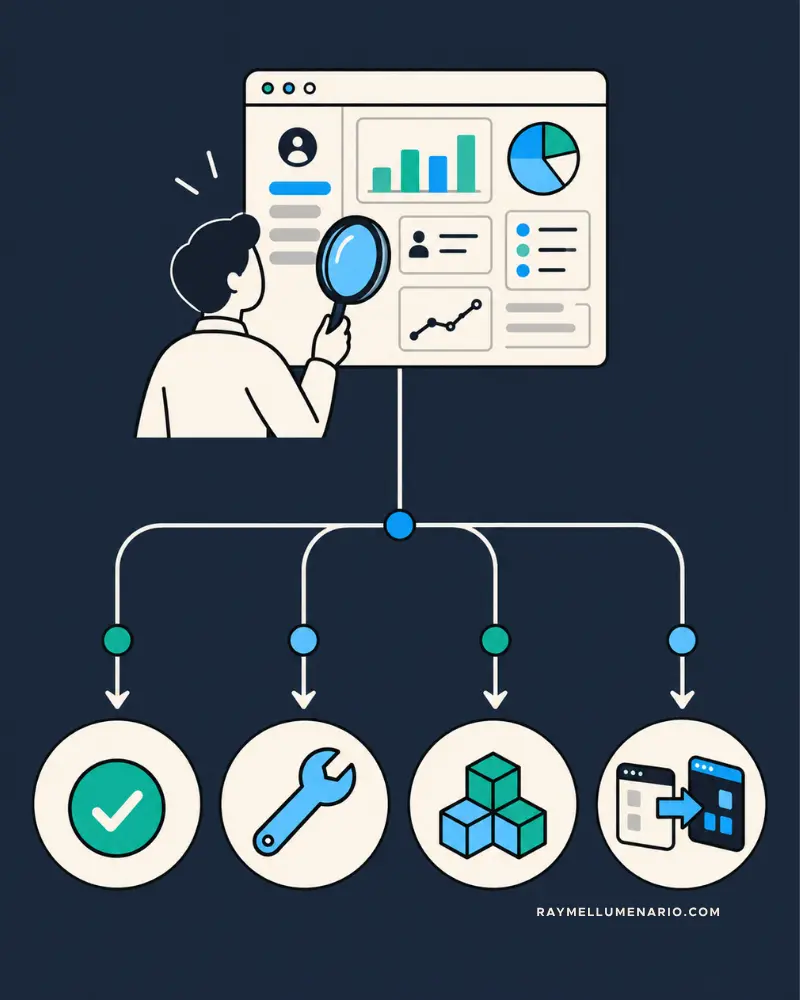
Small Business Marketing Budget: How to Set One Your Team Can Use
Most advice about a small business marketing budget starts with a percentage of revenue. That gives you a number. It does not tell you whether you can sustain the spending, where it should go, or who has time to do the work.
I would start with three questions: What can the business safely commit? What is limiting growth right now? What result would justify spending more?
The short answer: Set a monthly marketing budget you can sustain for 90 days. Include the full cost of people, production, tools, and promotion. Put most of the flexible money toward the step that is stopping qualified prospects from becoming customers. Review what happened before adding another channel.
The U.S. Small Business Administration says there is no fixed percentage that fits every business. A revenue percentage can be a useful reference, but it should not make the decision for you.
Count the full cost of marketing
Your marketing budget is more than your ad spend. Depending on your plan, it may include:
People: contractors, consultants, or employee time.
Production: landing pages, copy, design, photography, video, and email.
Promotion: ads, sponsorships, events, or other paid distribution.
Systems: your CRM, email platform, forms, analytics, and call tracking.
If you do the work yourself, record the hours alongside the cash cost. A plan with cheap software can still be expensive if it takes ten hours a week that you do not have.
Separate one-time costs from recurring costs, too. Rebuilding a landing page this month is a different commitment from running ads every month. You need to know which bills will repeat.
Step 1: Set a 90-day spending ceiling
Start with cash the business can commit without putting payroll, taxes, delivery, or its normal buffer under pressure. Multiply the monthly amount by three. That is your test ceiling, not a requirement to spend every dollar.
Say you can safely commit $1,500 a month. Your 90-day ceiling is $4,500. If that only works when you assume new sales will arrive immediately, lower the number. A service business may wait weeks between an inquiry and a signed client.
You can compare your ceiling with a revenue-based estimate. For example, 5% of $20,000 in monthly revenue is $1,000. That calculation is a reference point, not a recommended rate. Two businesses with the same revenue can have very different margins, cash reserves, and growth capacity.
My free Marketing Budget Calculator gives you a directional range and channel priorities based on revenue, niche, and growth stage. Check its result against your actual cash and the time your team can give the work.
Step 2: Decide how much new business you can handle
Before paying for more leads, ask how many new customers you could serve well next month.
Write down:
How many new customers can you realistically onboard?
How many qualified opportunities does it usually take to win one?
How long does it take from first inquiry to sale?
Use recent CRM records, invoices, and form submissions to make a rough baseline. If you do not have enough data yet, mark the gaps. Do not turn a guess into a precise acquisition target.
If your team can take on two new clients, paying for twenty more inquiries may create a follow-up problem rather than growth. Capacity belongs in the budget decision.
Step 3: Find the constraint before choosing a channel
Where do people stop moving? That is where I would look first.
What you see
Where to focus spending
Few relevant visitors, but the leads you get tend to buy
Expand the source already bringing qualified prospects, or test one related source.
Plenty of visitors, but few inquiries
Improve the offer, page, form, and call to action before buying more traffic.
Many inquiries, but few are a good fit
Improve targeting and qualification.
Qualified people inquire, but few book a call
Fix routing, scheduling, and follow-up.
Calls happen, but few customers close
Examine the offer, sales process, pricing, and customer fit.
When qualified leads do not book, fix that step before paying for more traffic.
You do not need a complex dashboard. A spreadsheet or CRM that records each lead’s source, qualification, next step, and outcome will give you a place to start. My guide to the marketing metrics that connect to revenue covers the numbers I would track.
Step 4: Give most of the flexible budget one job
Once you know the constraint, fund a focused improvement. Keep enough for basic tracking and for the source that already works. Splitting a small budget across every possible channel makes it hard to learn what helped.
Here is an illustrative first-month budget, not a standard split:
A founder-led service business can commit $1,500 this month. It receives relevant inquiries, but qualified prospects often fail to book a call. It spends $300 on lead tracking and routing, $800 on its booking page and follow-up process, and $400 to maintain its existing source of inquiries. Total: $1,500.
At the end of the month, the useful question is whether more qualified inquiries reached a booked conversation. A traffic increase would not answer it.
If the booking rate improves, the business can consider spending more to bring in prospects. If it does not, more traffic feeds the same leak.
Another business might have strong conversion and too few inquiries. Its primary move could be a focused search campaign, a partner program, or content that answers a buyer’s specific question. The constraint determines the allocation.
Step 5: Review results before raising the budget
Review spending and lead quality each month. Judge customer outcomes over a period that fits your sales cycle. If deals take several weeks to close, one month’s revenue may be a poor measure of that month’s marketing work.
Keep the review short:
What did you spend, including tools and production?
Which source brought qualified opportunities?
Where did those opportunities stop moving?
How many became customers, and how long did that take?
What will you keep, change, or stop next month?
Compare the cost of acquiring a customer with the gross profit that customer is expected to contribute, rather than revenue alone. If you have too little data for a reliable comparison, say so. You can still fix a clear follow-up problem while building a better baseline.
Increase spending when a source repeatedly brings qualified customers, the economics work, and your team can serve the extra demand. Hold or reduce it when lead quality falls, follow-up is broken, or you cannot tell what the money produced.
Give the budget a clear job
A useful small business marketing budget is an amount you can sustain and learn from. Set a safe ceiling. Count the full cost. Find the constraint. Fund one clear improvement. Then use customer outcomes to decide what earns more money.
If you need a starting range, use my free Marketing Budget Calculator. It gives you a place to start, then the steps above help you decide what to fund first.
Frequently asked questions
What percentage of revenue should a small business spend on marketing?
There is no percentage that works for every business. Use a benchmark as a starting point, then check it against available cash, margins, growth goals, sales cycle, and team capacity. The SBA’s guidance also treats revenue percentages as guides rather than fixed rules.
Is ad spend the same as a marketing budget?
No. Ads are one possible cost. A complete marketing budget also accounts for the people, assets, tools, and systems needed to turn interest into customers.
What if I cannot afford paid ads?
Start with the strongest source of qualified opportunities you already have. That might be referrals, search traffic, a partner, or an email list. Protect time for the work, follow up consistently, and record what produces real opportunities.
How often should I change my marketing budget?
Review it monthly. Make larger changes when you have enough evidence for your sales cycle. Change sooner if the business cannot safely sustain the spending or if a clear tracking or follow-up problem is wasting it.
CRM Health Check for Small Teams: Fix, Rebuild, or Replace?
Your CRM does not need to be perfect. It needs to capture leads reliably, show what happens next, and give your team information they can trust.
A CRM health check tests whether that is happening across six areas: lead capture, pipeline structure, follow-up, automation, reporting, and team adoption. The point is not to produce a prettier database. It is to find the few problems that create lost leads, confused handoffs, or unreliable decisions.
The short version: Mark each area green, yellow, or red. Keep the CRM if the important processes work. Fix isolated problems. Rebuild the setup if the platform still fits but the configuration no longer matches the real process. Replace it only when the platform blocks an essential workflow or costs more to maintain than a migration would solve.
What are the signs of an unhealthy CRM?
A CRM problem rarely announces itself as a CRM problem. It usually appears as a sales, marketing, or reporting problem.
Leads arrive in an inbox but never reach the CRM.
Duplicate records split activity across multiple contact histories.
Deals remain in the same stage long after the conversation has changed.
No one knows who owns the next action.
Automations run without anyone checking the results.
Reports show numbers the team does not trust.
A separate spreadsheet has become the real source of truth.
Simple updates require so much admin work that people avoid them.
One symptom does not automatically justify replacing the system. A broken form connection, for example, can make the whole CRM look unreliable even when the database and pipeline are fine. The health check separates local faults from structural ones.
Audit first, change second
Start with a read-only review. Do not merge records, delete fields, rewrite stages, or switch off workflows while evidence is still being collected.
Preserve a baseline export and record what each important field, stage, and automation currently does. This matters because some cleanup actions are difficult or impossible to reverse. HubSpot, for example, states that record merges cannot be undone.
The audit should answer three questions before any repair begins:
Where does the process fail?
What business outcome does that failure affect?
Is the cause data, configuration, process, or platform fit?
Check these six areas
1. Lead capture
Test every place a lead can enter the business. Common entry points include website forms, booking pages, advertising forms, shared inboxes, chat, event lists, imports, and manual entry.
For each source, submit a test lead and check:
Does the record reach the CRM?
Is the original source preserved?
Is an owner assigned correctly?
Does the right person receive a notification?
Does the submission create or worsen duplicate records?
Are the fields useful for the next action, or merely collecting data?
Duplicate prevention also depends on how the platform identifies records. HubSpot documents, for example, that it uses email addresses to deduplicate contacts and company domain names to deduplicate companies in common record-creation scenarios. Review the deduplication rules for the CRM in use instead of assuming every integration follows the same logic.
2. Pipeline structure
A pipeline should describe observable progress, not a collection of vague intentions. Stages such as Active, Working, and In progress invite interpretation. Two people can use the same label for completely different situations.
Use stages tied to events that can be verified. A simple sales pipeline might include:
New inquiry
Qualified
Discovery scheduled
Proposal sent
Closed won
Closed lost
The exact stages depend on the sales process. The test is whether someone outside the deal can understand why it sits in a stage and what must happen before it moves. HubSpot’s pipeline guidance makes a similar distinction: separate pipelines are useful for genuinely different processes, while won and lost stages are necessary for accurate sales and revenue reporting.
3. Ownership and follow-up
Every active lead or deal should have one owner, one next action, and one date for that action. Shared responsibility often becomes no responsibility.
Sample recent leads and ask:
Can the owner be identified without reading the entire record?
Is the next action visible?
Is there a due date?
Can overdue follow-up be found in one view?
Is there a clear rule for reassigning leads when someone is unavailable?
If the system can store these details but the process does not require them, the problem is probably not the CRM. Start by defining the follow-up rule. A simple operating approach is covered in how to fix slow lead follow-up without buying more software.
4. Automation
Automation should remove a known manual step without hiding responsibility. An old workflow that nobody owns can quietly overwrite data, send the wrong message, or create conflicting tasks.
Create an inventory of active automations with these fields:
Purpose
Enrollment trigger
Actions performed
Records affected
Owner
Last test date
Safe way to stop or roll back the workflow
Test the highest-risk workflows with sample records before editing them. HubSpot provides options to test workflows against criteria or a specific record, but the same principle applies in any CRM: verify both enrollment and the resulting actions.
5. Reporting
A healthy CRM does not need dozens of dashboards. It needs to answer the questions used to make decisions.
How many leads entered during the period?
Where did they come from?
How many became qualified opportunities?
Where do opportunities stall or drop out?
How many deals were won or lost?
Why were deals lost?
How much confirmed revenue can be connected to those deals?
Reconcile a small sample against another reliable source such as form submissions, invoices, ad-platform records, or signed agreements. When the numbers disagree, trace the difference to its source rather than adding another dashboard. For a practical way to handle imperfect source data, see this guide to small-business marketing attribution.
6. Team adoption
Adoption is not measured by logins alone. People can open the CRM every day and still avoid using it as the working system.
Look for operational evidence:
Important information lives in private notes or messages.
The team uses a shadow spreadsheet to manage active work.
Fields are guessed because their purpose is unclear.
Records are updated only before meetings.
Stages are skipped or used differently by each person.
Reports have to be rebuilt manually outside the CRM.
These workarounds are useful clues. They show where the system creates friction, where the process lacks a rule, or where the CRM no longer fits the work.
Rate each area green, yellow, or red
A simple rating keeps the review focused without inventing universal benchmarks. A low-volume business and a high-volume sales team should not be judged by the same percentage thresholds.
Rating
Meaning
Response
Green
The process works reliably and the information supports decisions.
Maintain it and check it periodically.
Yellow
The process works, but recurring errors or workarounds create risk.
Define the fault and schedule a focused repair.
Red
The process regularly loses information, hides responsibility, or produces misleading output.
Contain active harm, then redesign or replace the affected part.
Add a short evidence note beside every rating. “Pipeline is red” is an opinion. “Seven of the ten open deals sampled have no next action or due date” is evidence that can guide a repair.
Should you keep, fix, rebuild, or replace the CRM?
Decision
When it fits
Typical next step
Keep
The important processes are reliable, reporting is usable, and the team can work without major workarounds.
Document ownership and set a routine maintenance review.
Fix
The basic structure is sound, but one or more isolated problems create friction or bad data.
Repair the smallest root cause, test it, and compare the result with the baseline.
Rebuild
The platform is suitable, but fields, stages, permissions, integrations, or workflows no longer match the real process.
Design the process first, rebuild the configuration in controlled phases, and migrate only necessary data.
Replace
The platform cannot support an essential workflow, remains difficult after simplification, or costs more to maintain than migration is likely to solve.
Define requirements from the audit, compare alternatives, and plan migration and adoption before cancelling the current system.
Several red ratings do not automatically mean “replace.” If those ratings share one cause, such as an outdated pipeline design, a rebuild may solve them together. Replacement makes sense when the limitation belongs to the platform rather than the current setup.
Fix problems in this order
Stop active harm. Pause faulty messages, incorrect routing, destructive automation, or integrations that overwrite good data.
Make ownership visible. Give active records a clear owner, next action, and date.
Simplify the pipeline. Remove stages and fields that do not change a decision or action.
Repair necessary data. Clean the fields required for routing, follow-up, segmentation, and reporting. Do not clean unused data for its own sake.
Restore reporting trust. Reconcile the few numbers used to make decisions.
Improve convenience. Add useful views, notifications, integrations, and automation after the underlying process works.
This order prevents a common mistake: automating a process that is still unclear. Faster confusion is still confusion.
A 30-minute CRM health check
This quick version will not replace a full audit, but it can reveal whether a deeper review is justified.
Time
Check
0 to 5 minutes
Choose a sample of 20 recent leads and 10 open deals.
5 to 10 minutes
Check capture, source, duplicates, and ownership.
10 to 15 minutes
Check pipeline stages, next actions, and overdue follow-up.
15 to 20 minutes
Inventory active automations and test the highest-risk one safely.
20 to 25 minutes
Reconcile one important report and note adoption workarounds.
25 to 30 minutes
Mark each area green, yellow, or red, then choose keep, fix, rebuild, or replace.
Record the sample, evidence, decision, owner, and review date. That creates a baseline for the next check and prevents the audit from becoming a list of opinions.
How often should a CRM health check be run?
A light quarterly check is a practical default for a small team. Run another review after a major process change, CRM migration, integration launch, team restructure, or sudden drop in lead or reporting quality.
The cadence matters less than consistency. Use the same core checks and compare the evidence over time.
Can a spreadsheet be healthier than a CRM?
Yes. A clear spreadsheet can be healthier than a poorly configured CRM when lead volume is low, one person owns the process, and the information needed is simple.
The spreadsheet starts to reach its limits when ownership spreads across people, follow-up needs reminders, activity history matters, permissions become important, or reporting requires repeated manual work. The right system is the simplest one that can support the real process reliably.
Should the CRM be replaced if the team dislikes it?
Dislike is a signal, not a diagnosis. Find the source of the frustration. Too many fields, unclear stages, slow screens, missing integrations, poor training, and a true platform limitation require different responses.
Simplify the process and remove unnecessary work first. If the essential workflow still feels difficult, include usability and adoption in the replacement requirements.
The final test
A healthy CRM makes the next action easier to see. It preserves enough context to continue a conversation, gives each active record a clear owner, and produces numbers that can survive a basic reality check.
If it does those things, keep it and maintain it. If it almost does, fix or rebuild the weak parts. Replace it only when the platform itself stands between the team and a process that has already been made clear.
How to Get Your Business Cited by ChatGPT and AI Overviews Without an Enterprise Budget
More of your prospects are asking ChatGPT, Perplexity, and Google’s AI Overviews the questions they used to type into Google: who’s a good option for this, what tool handles that, how do I fix this problem. Getting cited in that answer depends less on your Google ranking than it used to, though exactly how much less varies from one system to the next.
Getting your business cited by ChatGPT and AI Overviews means structuring your content, your third-party mentions, and your public presence so AI systems can find your business, trust it, and quote it directly inside an answer, without you paying for placement. Each system works a little differently. Microsoft Copilot is built directly on Bing, a fact Microsoft has confirmed since renaming Bing Chat to Copilot. For Enterprise and Edu workspaces, OpenAI says ChatGPT may share disassociated search queries with Bing to return web results. OpenAI also operates its own search crawler, OAI-SearchBot, for ChatGPT search visibility. Google’s AI Overviews and AI Mode pull from Google’s own Search systems. Claude hasn’t officially named its web search provider, but Anthropic’s own subprocessor list, documented independently by developer Simon Willison, added Brave Search in 2025. Perplexity blends its own index with other sources. None of this requires an enterprise SEO retainer to start.
Why Does Getting Cited by AI Matter More Than Ranking Well Right Now?
Google says plainly that there are no special files, schema, or optimizations required to appear in AI Overviews or AI Mode: a page just needs to be indexed and eligible to show a snippet in regular Search, the same technical bar as classic search results. That’s good news if you’ve been putting off AI-specific tactics waiting for a bigger budget: the foundation is the SEO foundation you already have, or can build without one.
Google has also said that clicks arriving from AI Overviews tend to be higher quality, meaning people spend more time on the page they land on. Whether that translates into more paying customers for your specific business is a separate question, worth testing with your own numbers rather than assuming. The idea that AI-referred visitors convert better is a reasonable hypothesis: someone who just had a detailed back-and-forth with an AI system about their problem is arguably further along than someone scanning a page of results cold. It isn’t a proven fact across businesses yet.
I covered the fundamentals of generative engine optimization for founders in an earlier post. This one goes further: what’s changed engine by engine since then, and how to check whether any of it is working without buying a monitoring tool.
It’s easy to assume AI visibility is fine because Google traffic looks healthy. That’s not always true. A site can block an unfamiliar crawler by default or carry a stray noindex tag, and neither one would necessarily show up in Google Search Console, since Search Console reflects Google’s own crawling activity, not every AI system’s. Ranking well and being reachable by AI crawlers are two separate problems, and only one of them shows up in the reports founders already check.
How Do You Check If ChatGPT and AI Overviews Are Actually Citing You, Without Paying for a Tool?
There’s a growing category of paid tools built just to track this: dashboards that monitor your brand across ChatGPT, Perplexity, and Google AI Mode, then benchmark you against competitors. They’re useful at scale. You don’t need one to find out where you stand today.
Ask the questions yourself, in each engine, directly
Open ChatGPT, Perplexity, Claude, and Copilot in separate tabs. Ask the exact questions a buyer would ask: who’s a good option for your service in your niche, what’s the best tool for your specific situation. Note whether you’re named, and whether a competitor gets named instead. Do this monthly, and log it somewhere simple, a spreadsheet tab is enough.
Check GA4 for the traffic that’s already arriving
Google Analytics publishes an official worked example for exactly this: setting up a custom channel group to isolate AI assistant traffic, with a suggested pattern matching ChatGPT, Gemini, Copilot, Claude, and Perplexity by source. In GA4, that’s under Admin, then Data display, then Channel groups.
Set it up, but don’t treat it as complete. Referrer information gets lost or stripped in plenty of ordinary situations, mobile apps and in-app browsers being common culprits, so any AI-traffic view built on referrer data will undercount. If your Direct traffic has increased unexpectedly, some AI-assisted visits may be included in that total, but referrer data alone cannot show how much.
Check your server logs for the crawlers, not just the visitors
Your own site being crawled is one signal, not the whole picture. An AI system can still mention or cite your business through a page it crawled elsewhere, a review site, an industry write-up, a directory listing, without ever visiting your domain directly.
So check your access logs, or your CDN’s logs if you’re on Cloudflare, for OAI-SearchBot, Claude-SearchBot, and PerplexityBot specifically, not the training-only bots. If none of them show up, treat that as something worth digging into, not proof your site is inaccessible. A robots.txt rule or firewall setting could be blocking the crawler, the crawler simply hasn’t reached you yet, or the page was served from CDN cache before the request ever touched your origin logs, in which case it wouldn’t show up no matter how accessible your site actually is.
Get cited by ChatGPT and AI Overviews: to have an AI system name your business, quote your content, or link to your site directly inside a generated answer, without paying for placement. Citation depends on structured, extractable content and consistent, validated mentions of your business elsewhere on the web, not on your search ranking alone.
What Should You Fix First to Earn More Citations?
Four things move the needle, and none of them need a developer.
Lead with the answer, not a pitch. A page that opens with a generic company introduction answers no question and gets skipped. Put the direct answer to the question someone’s actually asking in the first 100 words, on every page that matters.
Here’s the difference in practice. A services page that opens with a line like “a leading provider of marketing consulting for small businesses” gives an AI model nothing to extract, it’s a claim, not an answer. A page that opens with “I help founder-led teams under 20 people set up marketing systems without hiring a full-time marketer” gives it a direct, quotable sentence. Same business, same offer, one version is far easier for a model to lift into an answer.
Structure for extraction. Add an FAQ section with plain, direct answers, keep one clear H1 and descriptive H2s, and add structured data (Article, FAQ, Person schema). Google is explicit that this doesn’t guarantee inclusion in AI features, structured data just needs to match the visible text on the page as part of ordinary good practice, the same standard that applies everywhere else in Search. Treat it as giving search systems clearer context, not a citation guarantee.
Earn third-party mentions. A review site, a forum thread, someone else’s blog mentioning you carries a kind of credibility your own site can’t manufacture on its own. Exactly how much this outweighs your own site’s content isn’t something I can point to a solid, independent study for, but the logic holds regardless: a handful of real outside mentions is a reasonable use of time next to writing another page about yourself.
Keep it current. Refreshing pages on a deliberate schedule is a sensible editorial habit on its own, independent of any AI-visibility claim: it catches outdated information, keeps you relevant to what people are actually asking, and gives you a reason to revisit and improve older content. Treat it as good practice, not a guaranteed traffic lever.
What’s the Claude and Brave Search Situation?
Claude appears to use Brave Search for at least some of its web results, though Anthropic hasn’t confirmed the mechanics publicly. Anthropic’s own subprocessor list added Brave Search in 2025, which is the clearest evidence available so far.
If it holds up, ranking well on Google doesn’t necessarily carry the same weight with Claude that it does with Google’s own AI Overviews, since it may be pulling from a different index. Checking whether Brave surfaces your business at all takes five minutes: search your own business name and domain directly on search.brave.com and see what comes back. It won’t confirm anything about Claude specifically, but it’s a reasonable, free way to see whether Brave has indexed you.
How Does This Fit Into a Weekly Marketing Review?
None of this needs its own dashboard or its own hour every week. I run it inside the same lean marketing framework I use for everything else: pick one thing to track, check it on a fixed schedule, and only add a new tool once the manual version stops being enough.
For this specific check, that means one added item in the same weekly 20-minute review: open ChatGPT, Perplexity, and Claude, ask your two or three most important buyer questions, and note what changed since last week. Once a month, glance at the GA4 channel group and your server logs for anything new.
The mistake I see most often isn’t skipping this entirely. It’s founders who run the check once, get discouraged or excited by a single result, and never look again. A citation you don’t see this week can show up next month once a crawler catches up, and one you have this month can disappear if a competitor earns a stronger third-party mention than yours.
Where Should You Actually Start This Week?
You don’t need to do all of this at once, and trying to is how it gets abandoned by week two. In order:
Ask ChatGPT, Perplexity, and Claude your two or three most important buyer questions today, before changing anything, so you have a starting point to compare against.
Rewrite the first 100 words of your homepage and your top two service pages so they answer a question instead of introducing your company.
Check search.brave.com for your own business name, and check your server logs for OAI-SearchBot, Claude-SearchBot, and PerplexityBot, to see whether these crawlers are reaching your site at all.
Pick one third-party mention to earn this month, a review, a guest mention, a forum answer, rather than adding another page to your own site.
By the end of the month, you’ll have a before-and-after answer to the same set of buyer questions, real traffic data instead of a guess, and a clearer read on whether the crawlers can reach you. That’s a practical citation check, done without a subscription.
Frequently Asked Questions About Getting Cited by ChatGPT and AI Overviews
Do I need to rank on page one of Google to get cited by ChatGPT?
Not necessarily. Copilot is built on Bing, and ChatGPT’s search feature shares queries with Bing too, so your Google ranking matters most for Google’s own AI Overviews and AI Mode specifically. Claude may draw on Brave Search results for at least some queries, based on third-party reporting rather than official confirmation. Structured, clearly written content can still get cited by other engines independently of where you rank on Google.
How long does it take to start showing up in AI answers?
There’s no reliable published timeline for this across engines. It depends on how often each engine’s crawler revisits your pages and how quickly new third-party mentions accumulate, both of which vary too much to put a single number on.
Do I need a paid AI citation tracking tool to get started?
No. Manually testing your priority questions in each engine, plus a custom GA4 channel group and a look at your server logs, covers what most small businesses need before a paid tool earns its cost.
Does getting cited by AI actually bring in customers, or just visibility?
Potentially both, though the customer half is still more hypothesis than proven fact. Google has said AI Overview clicks tend to run higher on time spent per page, but whether that extends to more conversions for your specific business is worth testing against your own numbers rather than assuming.
Is setting up an llms.txt file worth it?
It’s low-cost, usually well under an hour of work. But SE Ranking’s analysis of roughly 300,000 domains found no correlation between having an llms.txt file and getting cited more often by AI systems. Worth flagging that this is vendor research from an SEO tool company, not independent academic research, but it’s the largest look at the question so far. Treat llms.txt as an optional, low-risk experiment, not a citation strategy to rely on.
If you want to go deeper on the lean systems behind this, raymellumenario.com is where I share more.
The Lean Marketing Framework (And How to Run It Yourself)
Here’s a number that should bother you: most small business marketing plans copy tactics built for a team ten times their size, then wonder why nothing sticks. I’ve watched this happen with a solo founder running six channels at once and a five-person team drowning in software they barely use.
The Lean Marketing Framework is the four-step system I use to run marketing for lean, small, and founder-led teams without hiring extra people or buying more software. It replaces a long list of tactics with four repeatable decisions: pick one channel, track three numbers, automate the busywork, and review on a weekly cadence. I built it after years of watching resourceful teams burn time and budget chasing tactics instead of running a system.
What Is the Lean Marketing Framework?
I built this after watching the same pattern play out three different ways: a solo founder juggling five marketing channels alone, a five-person team with a tool for everything and a system for nothing, and a lean operator inside a bigger company who owned every marketing decision without a dedicated marketing hire to share the load. All three had the same problem.
They had a drawer full of tactics, a folder of half-finished dashboards, and no clear system for deciding which of it actually deserved their time this week. Lean doesn’t mean cheap, and it doesn’t mean small. It means resourceful: fewer actions, chosen on purpose, reviewed often enough to know if they’re working.
A ten-person team with a bloated approval process isn’t lean. A solo founder running one disciplined channel and checking it every week is. The framework is built around that distinction, not around headcount, revenue, or how many people report to you.
Why Most Marketing Advice Doesn’t Work for Lean, Small, and Founder-Led Teams
Most marketing content assumes a team that can run five channels at once, a budget that survives a bad month, and someone whose full-time job is watching a dashboard. Take any one of those away and the advice stops being useful. It’s written for the marketing department a founder wishes they had, not the one person actually doing the work between calls, deliveries, and everything else running a small business requires.
I’ve seen this play out the same way more times than I can count. A founder starts posting on Instagram, adds LinkedIn a month later, tries cold email after a conference, layers in paid ads because a friend recommended it, then wonders why revenue hasn’t moved even though the calendar looks full.
None of those channels failed. None of them ran long enough, or got reviewed closely enough, to know if they worked before the next one got added on top. Adding another tactic to a team that hasn’t reviewed its last three is the most common way I see marketing budgets get wasted. The fix isn’t fewer ideas. It’s a system for testing them one at a time.
Lean marketing framework: a repeatable system for running marketing with minimal headcount and budget, built around choosing one channel at a time, tracking only the numbers that change a decision, and automating repetitive tasks instead of adding people. It favors fewer, disciplined actions over a long list of tactics.
How Does the Lean Marketing Framework Actually Work?
Four steps, run in order, repeated every month. Each one exists to remove a specific way lean teams waste time or budget.
Step 1: Pick One Channel and Prove It Works
Choose the single channel most likely to reach your actual buyers, not the one that’s trending this month. Run it alone for 30 days before adding a second, even if a new opportunity feels urgent.
Most lean teams don’t fail because they picked the wrong channel. They fail because they never gave one channel long enough to prove itself before switching. I go deeper on how to tell which channel actually deserves the credit in marketing attribution for small business.
Step 2: Track the Three Numbers That Actually Matter
Pick three numbers tied directly to revenue, not vanity metrics like impressions or followers. For most lean teams, that’s leads generated, cost per lead, and close rate, though the exact three will depend on your business.
Anything beyond three numbers becomes a report nobody reads. I walk through exactly how to track these without a big analytics stack in how to measure marketing ROI, since this step only works if the tracking itself doesn’t become another full-time job.
Step 3: Automate the Busywork, Not the Relationships
Automate scheduling, follow-up reminders, invoice nudges, and repetitive admin. Never automate the actual conversation with a prospect or customer, even when a tool promises it can sound human.
That distinction is where most automation advice goes wrong for small teams: it optimizes the wrong half of the job. The busywork should disappear. The relationship should still feel like it’s coming from you, because it is.
Step 4: Review Weekly, Decide Monthly
Set a 20-minute weekly check on the three numbers from Step 2. Set a separate monthly decision on whether to keep, cut, or add a channel. Nothing changes between those two checkpoints, on purpose.
Reviewing daily creates noise. Reviewing quarterly means you find out a channel failed three months after it stopped working. Weekly and monthly is the cadence that catches problems while they’re still cheap to fix.
How Do You Run the Lean Marketing Framework Yourself?
You don’t need new software to start. You need thirty minutes and a spreadsheet.
List every channel you’re currently touching, including the ones you’ve half-abandoned. Pick the one with the clearest signal so far. Pause the rest for 30 days, not forever, just long enough to focus.
Set up the three numbers from Step 2 in a plain spreadsheet, not a dashboard nobody opens. A single tab with a date column is enough to start.
List every task you repeat weekly. Automate one of them this week: an email sequence, a scheduling link, an invoice reminder. Pick the one costing you the most time, not the easiest one.
Put a 20-minute review on your calendar, same day and time, every week, before you touch anything else in this framework. If it’s not on the calendar, it won’t happen.
By the end of week one, you’ll have one channel running, three numbers being tracked, one task automated, and a standing review on the calendar. That’s the entire system. Nothing about it requires a developer, a retainer, or new software.
Where Do Most Teams Get the Lean Marketing Framework Wrong?
The mistake isn’t picking the wrong channel. It’s reviewing too late to matter. Most teams treat lean as an instruction to cut everything, when the real discipline is committing to fewer things and checking on them often enough to catch what’s not working before a full quarter is gone.
I’ve watched a founder run the exact right channel, with the exact right message, and still lose six months because nobody looked at the numbers until a slow quarter forced the question. By the time the review happened, there was no way to tell whether the channel had stopped working in week two or week eighteen.
The channel wasn’t the problem. The absence of a fixed review date was. A weekly 20-minute check would have caught it in the first month, at a fraction of the cost.
This isn’t a new idea. It’s the same build-measure-learn loop that the Lean Startup methodology made popular for product teams, applied to marketing instead of product. The insight most marketing content misses is that the loop only works if the review happens on a fixed schedule, not whenever someone remembers.
I use this with solo founders running everything themselves, small teams of five or six, and lean operators who report into a bigger company but still own every marketing decision alone. The framework doesn’t change based on which of those you are. What breaks it every time isn’t the size of the team. It’s skipping the review.
Frequently Asked Questions About the Lean Marketing Framework
Is the Lean Marketing Framework only for founders?
No. It’s built for anyone running marketing without a full team behind them, whether that’s a solo founder, a small in-house team, or one person inside a larger company with no dedicated marketing hire.
How long before I see results from this framework?
Most teams see a clearer picture of what’s working within one full monthly cycle, since the framework is built around a 30-day channel test and a monthly keep-or-cut decision.
Do I need any marketing software to run this?
No. A spreadsheet and a calendar are enough to start. Software can replace the spreadsheet later, but it’s never required to run the framework.
How is this different from just doing less marketing?
Doing less marketing usually means neglect. This framework means committing to fewer actions on purpose and reviewing them often enough to know if they’re working, which is a discipline, not a cutback.
How is this different from a marketing plan?
A marketing plan is usually a list of tactics to execute. This framework is a system for deciding which tactic gets tried, tracked, kept, or cut, on a fixed schedule, regardless of which tactics end up on the list.
If you want to go deeper on lean marketing systems like this one, raymellumenario.com is where I share more.
How to Stop Losing Leads to Slow Follow-Up Without Buying Software
Some benchmarks report a large lift in conversion when businesses respond to a lead within a minute, up to 391% in some reports, though the exact figure depends on the study and sales context. One widely-cited average, tracing back to classic Harvard Business Review and InsideSales.com research, puts typical business response time at 42 hours.
Direct answer: Here’s how to stop losing leads without buying software first: fix follow-up speed with notifications, clear ownership, and a fixed check-in schedule, all free. In many cases, slower follow-up correlates with colder leads, though the exact relationship depends on your industry and lead source. A lot of the high-ranking content on this topic comes from software vendors, so the advice often leans toward buying a tool before you’ve tried the free version.
I see this constantly with small business owners: the marketing worked, the lead came in, and then it just sat there. Not because anyone was lazy. Because nobody owned the moment it arrived, and that’s a process gap, not something a subscription fixes on its own.
Why Do Leads Go Cold So Fast?
A lead’s interest tends to peak around the moment they hit submit. That’s when they’re likely thinking about your business the most. Every hour after that, their attention often shifts elsewhere, and in many cases, to whichever business responded first.
Speed to lead: the time between when a prospect submits an inquiry and when your business makes first contact. Some research associates longer delays with lower odds that lead becomes a customer, though the size of the effect varies by source.
One figure worth flagging: 51% of leads are reportedly never contacted at all, based on the same InsideSales.com research widely cited across this space. I haven’t independently verified InsideSales’ original methodology, but the direction of it matches what I see with clients: leads don’t usually trickle away slowly, they get dropped entirely.
What’s Actually Causing the Delay?
It’s rarely a motivation problem. It’s an ownership problem. A lead comes in through a form, an email, or a DM, and it lands in an inbox nobody’s watching in real time, because the owner is on a job site, in a client meeting, or just heads-down running the business.
One client I worked with had leads coming in from three different sources: the website form, a Facebook ad, and referral emails. Nobody was assigned to any of them specifically. Everyone assumed someone else would catch it. Some leads sat for four or five days before anyone replied. By then, most had already booked with someone else.
The fix wasn’t hiring anyone. It was assigning ownership and adding one notification.
Why Every Guide on This Topic Tells You to Buy Software
A lot of the high-ranking content on speed to lead comes from companies selling call-routing platforms, CRM add-ons, or automated texting tools, so the advice tends to lean toward buying a tool. That’s not necessarily bad advice, it’s advice with a business model attached, and worth knowing before treating it as neutral.
This next part is a specific example, not a benchmark: a client of mine got quoted $180 a month for a call-routing tool before we’d even tried turning on notifications. Two weeks after just doing that, their response time dropped from an average of 30 hours to under 20 minutes, and the subscription got shelved. I can’t say how typical that result is, I’ve only run it a handful of times, but it’s consistent with the general pattern that ownership and notifications close most of the gap before software does.
In my experience, paid tools earn their place at a specific point, not before it. Once you’re past roughly 15 to 20 leads a week and notifications alone can’t keep up, or once more than one person could plausibly own a lead and you need routing logic to decide who, that’s usually when a CRM or call-routing tool starts paying for itself. Before that point, you may be paying monthly for a problem a free notification setting already solves.
Three Ways Small Businesses Try to Fix This and Fail
Before assuming your situation needs something more complex, it’s worth ruling out the fixes that feel productive but don’t actually close the gap.
Checking email more often. Refreshing your inbox every twenty minutes feels like diligence, but it’s still reactive and it still depends on you remembering to look. A notification does the same job without needing you to remember anything.
Routing everything through one person as the team grows. What works when it’s just you stops working once there are three people who could plausibly answer a lead, because now everyone assumes someone else has it. Ownership has to be explicit again at every size, not just at the start.
Treating “we’ll get to it” as acceptable during busy weeks. The weeks you’re busiest are exactly the weeks leads sit longest, and exactly the weeks a competitor’s faster reply costs you the most. A system that only works when things are calm isn’t a system.
Assuming the first fast reply is the whole job. A quick response gets you the conversation, it doesn’t close the sale by itself. A lead that gets a fast first reply and then goes quiet again for three days is just a cold lead with better timing.
How Fast Is Fast Enough?
Some benchmarks suggest responding within 5 minutes is associated with roughly 8x higher conversion compared to slower follow-up, sourced from the same InsideSales.com research referenced above, though the exact lift will vary by industry and lead type. Under 1 minute is commonly cited as ideal, five minutes is a more realistic target most small businesses can actually hit.
In my own view, for a small business without a dedicated sales team, same-business-day is a reasonable floor to aim for. Past 24 hours, you’re likely competing on price and luck more than speed.
How to Stop Losing Leads Without Buying Software
None of this requires new headcount. It requires closing the gap between “lead arrives” and “someone notices.”
Who Should Actually Own This If It’s Not Just You
If it’s just you running the business, ownership isn’t really a decision, it’s just turning on notifications and committing to the check-in schedule.
With two people, split by source instead of splitting by time. One person owns web form leads, the other owns phone and referral leads, so there’s never a moment where a lead sits waiting for someone to claim it.
With three or more, rotate ownership by day or by week rather than by source, and make the rotation visible somewhere both people can see it. The failure mode at this size isn’t lack of effort, it’s ambiguity about whose day it is.
Turn on instant notifications. Every form, ad platform, and inbox you use has a push or text alert option. Most businesses never turn it on.
Assign a single owner per lead source. Not “whoever sees it first.” A named person, even if that person is you.
Send an automatic acknowledgment. A simple “got your message, calling you within the hour” buys real time without losing the lead’s attention.
Check lead inboxes on a fixed schedule, not randomly. Three set check-ins a day beats checking whenever you remember.
What to Actually Say in an Automatic Acknowledgment
The message doesn’t need to be clever, it needs to be immediate. Three versions that work depending on the channel:
Text or SMS: “Thanks for reaching out, this is [name] from [business]. I saw your message and I’ll call you within the hour.”
Email autoresponder: “Got your message. I personally review every inquiry and you’ll hear from me today, usually within a few hours.”
Missed call text-back: “Sorry I missed your call, I’m calling you back within the hour. If it’s urgent, reply here.”
Any of these buys you real time without the lead assuming they’ve been ignored.
If you’re past the point where manual checking works, marketing automation is usually the first system worth building, before anything more complex.
How Do You Know If the Fix Actually Worked?
Track one number for the next two weeks: the time between when a lead comes in and when you first respond, in hours. Write it down manually if you have to, a shared note or a spreadsheet column is enough.
If your average drops from days to hours, you’ll usually see it show up in your close rate within a month, not immediately. Response time is a leading indicator, it tells you the fix is working before the revenue number confirms it. I cover the measurement side of this in more depth in how to measure marketing ROI without a big analytics stack.
Frequently Asked Questions About How to Stop Losing Leads Without Buying Software
What counts as a fast lead response time for a small business?
Five minutes is commonly cited as the benchmark associated with the biggest jump in conversion, though the exact figure varies by source. Realistically, same business day is a reasonable floor if you’re running this yourself without a dedicated team.
Why do leads go cold even if I respond within a day?
A day is still slow relative to how fast buyer intent tends to decay. In many cases, comparison shopping happens within the first few hours, so a same-day reply can mean you’re already the second or third call someone’s taken.
Do I need a CRM to fix this, or can I fix it without new software?
You can fix the biggest part of this for free: turning on notifications and assigning ownership. A CRM helps once lead volume grows past what one person can track manually.
What’s the fastest fix if I only have 30 minutes to spend on this today?
Turn on instant notifications for every lead source you have right now. That single change closes most of the gap before you touch anything else on this list.
Does this apply to leads from referrals too, or just website and ad leads?
Yes. A referral still has a moment of peak interest, usually right after the person who referred them talks you up. A slow reply wastes that goodwill the same way it wastes ad spend.
At what point should I actually consider paying for lead-response software?
Once you’re consistently getting more than 15 to 20 leads a week, or once more than one person needs to share ownership of incoming leads, manual tracking starts breaking down. That’s the point a CRM or call-routing tool starts earning its subscription instead of sitting mostly idle.
How do I get my team to actually stick with this instead of falling back into old habits?
Make the review stage visible, not just the response stage. If nobody ever looks at whether response time actually improved, the new habit quietly erodes within a month. A five-minute check every Monday keeps it real.
If your leads are going cold and you want a second pair of eyes on where the gap actually is, raymellumenario.com is where I share more of this.