Here’s a number that should bother you: most small business marketing plans copy tactics built for a team ten times their size, then wonder why nothing sticks. I’ve watched this happen with a solo founder running six channels at once and a five-person team drowning in software they barely use.
The Lean Marketing Framework is the four-step system I use to run marketing for lean, small, and founder-led teams without hiring extra people or buying more software. It replaces a long list of tactics with four repeatable decisions: pick one channel, track three numbers, automate the busywork, and review on a weekly cadence. I built it after years of watching resourceful teams burn time and budget chasing tactics instead of running a system.
What Is the Lean Marketing Framework?
I built this after watching the same pattern play out three different ways: a solo founder juggling five marketing channels alone, a five-person team with a tool for everything and a system for nothing, and a lean operator inside a bigger company who owned every marketing decision without a dedicated marketing hire to share the load. All three had the same problem.
They had a drawer full of tactics, a folder of half-finished dashboards, and no clear system for deciding which of it actually deserved their time this week. Lean doesn’t mean cheap, and it doesn’t mean small. It means resourceful: fewer actions, chosen on purpose, reviewed often enough to know if they’re working.
A ten-person team with a bloated approval process isn’t lean. A solo founder running one disciplined channel and checking it every week is. The framework is built around that distinction, not around headcount, revenue, or how many people report to you.
Why Most Marketing Advice Doesn’t Work for Lean, Small, and Founder-Led Teams
Most marketing content assumes a team that can run five channels at once, a budget that survives a bad month, and someone whose full-time job is watching a dashboard. Take any one of those away and the advice stops being useful. It’s written for the marketing department a founder wishes they had, not the one person actually doing the work between calls, deliveries, and everything else running a small business requires.
I’ve seen this play out the same way more times than I can count. A founder starts posting on Instagram, adds LinkedIn a month later, tries cold email after a conference, layers in paid ads because a friend recommended it, then wonders why revenue hasn’t moved even though the calendar looks full.
None of those channels failed. None of them ran long enough, or got reviewed closely enough, to know if they worked before the next one got added on top. Adding another tactic to a team that hasn’t reviewed its last three is the most common way I see marketing budgets get wasted. The fix isn’t fewer ideas. It’s a system for testing them one at a time.
Lean marketing framework: a repeatable system for running marketing with minimal headcount and budget, built around choosing one channel at a time, tracking only the numbers that change a decision, and automating repetitive tasks instead of adding people. It favors fewer, disciplined actions over a long list of tactics.

How Does the Lean Marketing Framework Actually Work?
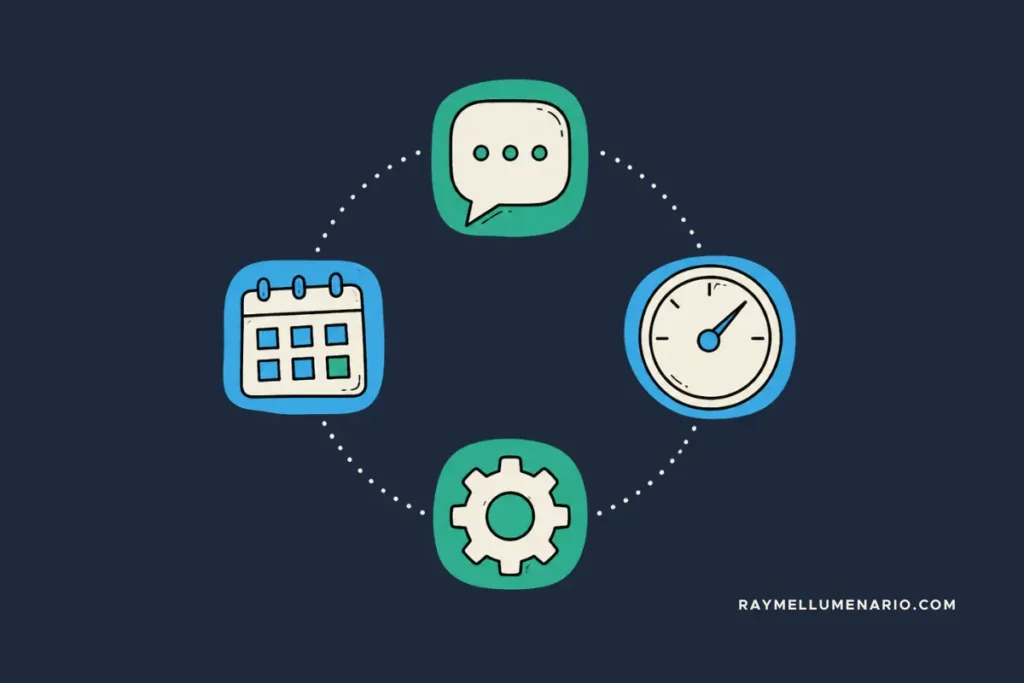
Four steps, run in order, repeated every month. Each one exists to remove a specific way lean teams waste time or budget.
Step 1: Pick One Channel and Prove It Works
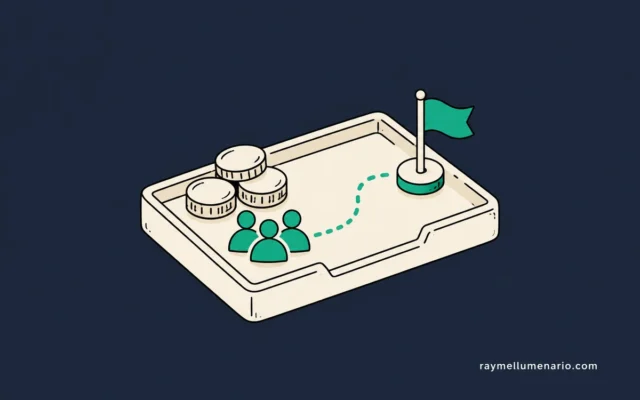
Choose the single channel most likely to reach your actual buyers, not the one that’s trending this month. Run it alone for 30 days before adding a second, even if a new opportunity feels urgent.
Most lean teams don’t fail because they picked the wrong channel. They fail because they never gave one channel long enough to prove itself before switching. I go deeper on how to tell which channel actually deserves the credit in marketing attribution for small business.
Step 2: Track the Three Numbers That Actually Matter
Pick three numbers tied directly to revenue, not vanity metrics like impressions or followers. For most lean teams, that’s leads generated, cost per lead, and close rate, though the exact three will depend on your business.
Anything beyond three numbers becomes a report nobody reads. I walk through exactly how to track these without a big analytics stack in how to measure marketing ROI, since this step only works if the tracking itself doesn’t become another full-time job.
Step 3: Automate the Busywork, Not the Relationships
Automate scheduling, follow-up reminders, invoice nudges, and repetitive admin. Never automate the actual conversation with a prospect or customer, even when a tool promises it can sound human.
That distinction is where most automation advice goes wrong for small teams: it optimizes the wrong half of the job. The busywork should disappear. The relationship should still feel like it’s coming from you, because it is.
Step 4: Review Weekly, Decide Monthly
Set a 20-minute weekly check on the three numbers from Step 2. Set a separate monthly decision on whether to keep, cut, or add a channel. Nothing changes between those two checkpoints, on purpose.
Reviewing daily creates noise. Reviewing quarterly means you find out a channel failed three months after it stopped working. Weekly and monthly is the cadence that catches problems while they’re still cheap to fix.
How Do You Run the Lean Marketing Framework Yourself?
You don’t need new software to start. You need thirty minutes and a spreadsheet.
- List every channel you’re currently touching, including the ones you’ve half-abandoned. Pick the one with the clearest signal so far. Pause the rest for 30 days, not forever, just long enough to focus.
- Set up the three numbers from Step 2 in a plain spreadsheet, not a dashboard nobody opens. A single tab with a date column is enough to start.
- List every task you repeat weekly. Automate one of them this week: an email sequence, a scheduling link, an invoice reminder. Pick the one costing you the most time, not the easiest one.
- Put a 20-minute review on your calendar, same day and time, every week, before you touch anything else in this framework. If it’s not on the calendar, it won’t happen.

By the end of week one, you’ll have one channel running, three numbers being tracked, one task automated, and a standing review on the calendar. That’s the entire system. Nothing about it requires a developer, a retainer, or new software.
Where Do Most Teams Get the Lean Marketing Framework Wrong?
The mistake isn’t picking the wrong channel. It’s reviewing too late to matter. Most teams treat lean as an instruction to cut everything, when the real discipline is committing to fewer things and checking on them often enough to catch what’s not working before a full quarter is gone.
I’ve watched a founder run the exact right channel, with the exact right message, and still lose six months because nobody looked at the numbers until a slow quarter forced the question. By the time the review happened, there was no way to tell whether the channel had stopped working in week two or week eighteen.
The channel wasn’t the problem. The absence of a fixed review date was. A weekly 20-minute check would have caught it in the first month, at a fraction of the cost.
This isn’t a new idea. It’s the same build-measure-learn loop that the Lean Startup methodology made popular for product teams, applied to marketing instead of product. The insight most marketing content misses is that the loop only works if the review happens on a fixed schedule, not whenever someone remembers.
I use this with solo founders running everything themselves, small teams of five or six, and lean operators who report into a bigger company but still own every marketing decision alone. The framework doesn’t change based on which of those you are. What breaks it every time isn’t the size of the team. It’s skipping the review.
Frequently Asked Questions About the Lean Marketing Framework
Is the Lean Marketing Framework only for founders?
No. It’s built for anyone running marketing without a full team behind them, whether that’s a solo founder, a small in-house team, or one person inside a larger company with no dedicated marketing hire.
How long before I see results from this framework?
Most teams see a clearer picture of what’s working within one full monthly cycle, since the framework is built around a 30-day channel test and a monthly keep-or-cut decision.
Do I need any marketing software to run this?
No. A spreadsheet and a calendar are enough to start. Software can replace the spreadsheet later, but it’s never required to run the framework.
How is this different from just doing less marketing?
Doing less marketing usually means neglect. This framework means committing to fewer actions on purpose and reviewing them often enough to know if they’re working, which is a discipline, not a cutback.
How is this different from a marketing plan?
A marketing plan is usually a list of tactics to execute. This framework is a system for deciding which tactic gets tried, tracked, kept, or cut, on a fixed schedule, regardless of which tactics end up on the list.
If you want to go deeper on lean marketing systems like this one, raymellumenario.com is where I share more.